

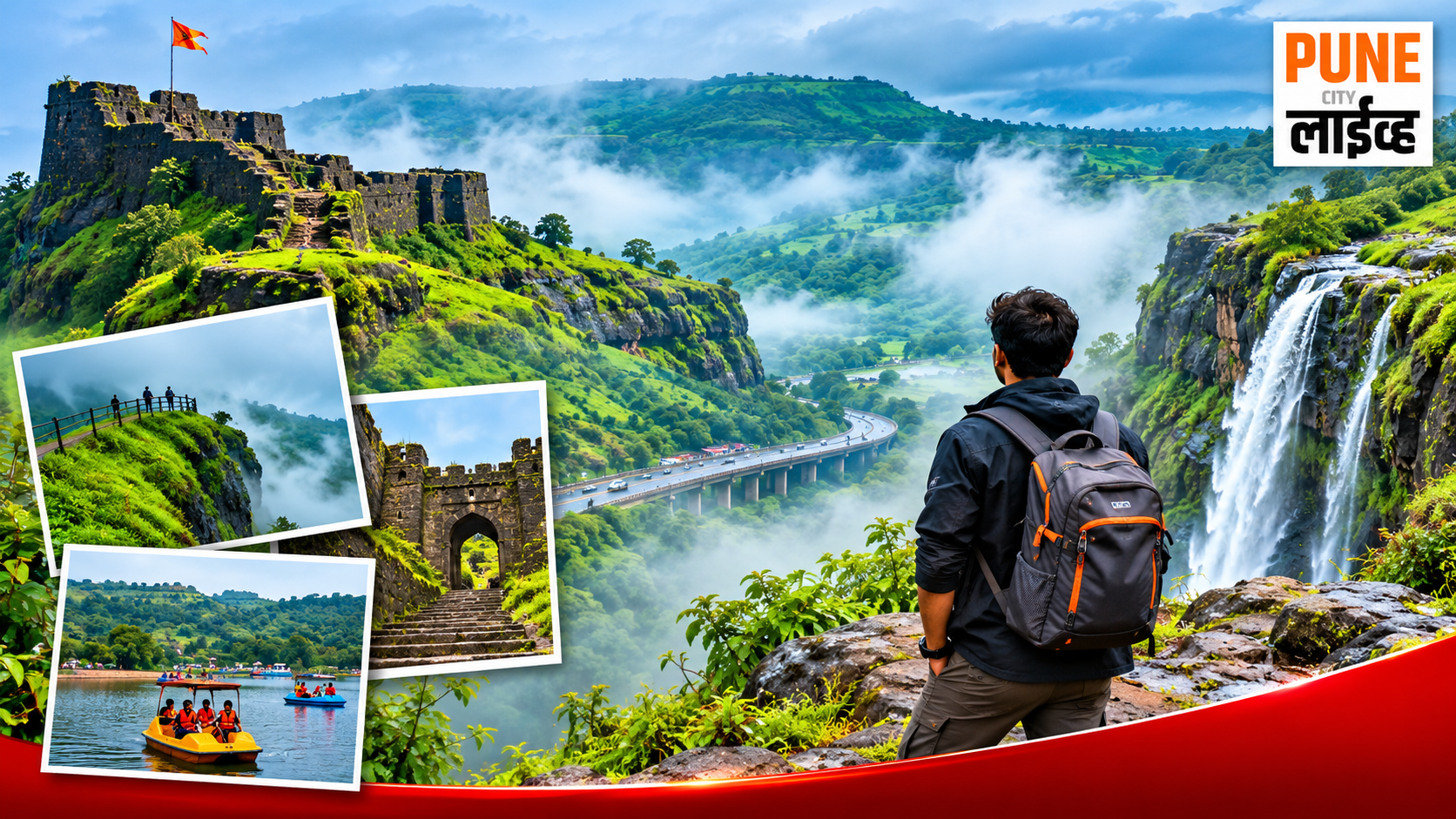

PUNE: Nestled in the lush Sahyadri mountain range at an elevation of 622 meters, Lonavala remains Maharashtra’s premier weekend getaway. Located roughly 64 kilometers from Pune city and 96 kilometers from Mumbai, this scenic hill station draws thousands of visitors year-round for its cascading waterfalls, ancient rock-cut caves, and historic Maratha forts.
Which Pune Zone Does Lonavala Fall Under?
For travelers navigating regional classifications around Pune, Lonavala does not sit inside the urban limits of Central, West, East, South, or North Pune, nor is it part of the Pimpri-Chinchwad / Hinjawadi IT belt.
Official Zone Classification: उपनगरे व ग्रामीण (Rural/Outskirts — Maval Taluka, Pune District).
Connectivity Note: While geographically located in the Western Ghats on the outskirts of the Pune Metropolitan Region, travelers commuting from पश्चिम पुणे (West Pune) and पिंपरी-चिंचवड व हिंजवडी (Pimpri-Chinchwad & Hinjawadi) enjoy the fastest direct road access via the Mumbai–Pune Expressway and NH-48.
Must-Visit Tourist Places in Lonavala

Whether you are seeking panoramic valley views or historical exploration, these spots anchor any Lonavala itinerary:
Bhushi Dam: The most popular gathering spot during monsoon season, famous for water overflowing across its stepped masonry structure.
Tiger’s Leap (Tiger Point) & Lion’s Point: Cliff-top viewpoints offering dramatic 650-meter drops into the valley, ideal for sunrise, sunset, and misty cloud views.
Karla and Bhaja Caves: Ancient Buddhist rock-cut cave complexes dating back to the 2nd century BCE, showcasing intricate chaitya prayer halls and carvings.
Lohagad & Visapur Forts: Twin hill forts perched above the Malavli plateau, offering accessible trekking trails and sweeping views of Pawna Lake.
Pawna Lake: A tranquil artificial reservoir located about 15–20 km from Lonavala town, renowned for lakeside camping and stargazing.
Essential Safety & Legal Guidelines for Tourists
To ensure sustainable tourism and visitor safety, travelers must adhere to local administration rules and Indian statutory laws:
District Collector Prohibitory Orders: During heavy monsoon spells, the Pune District Administration routinely enforces Section 163 of the Bharatiya Nagarik Suraksha Sanhita (BNSS) (formerly Section 144 CrPC) around hazardous waterfalls, deep reservoirs, and restricted forest zones behind Bhushi Dam. Crossing safety barricades or entering prohibited water zones is a punishable offense.
Environmental & Heritage Protection: Under the Wildlife Protection Act, 1972 and Ancient Monuments and Archaeological Sites and Remains Act, littering plastic, playing loud music in eco-sensitive zones, and defacing historic structures at Karla, Bhaja, or Lohagad carry strict fines.
Traffic & Drone Regulations: Follow Pune Rural Police traffic diversions on weekends and avoid unauthorized drone flying near defense establishments (such as INS Shivaji) or crowded viewpoints without DGCA clearance.