
Space Race in Indian Telecom: Will Starlink’s Entry Really Threaten Reliance Jio’s Dominance?

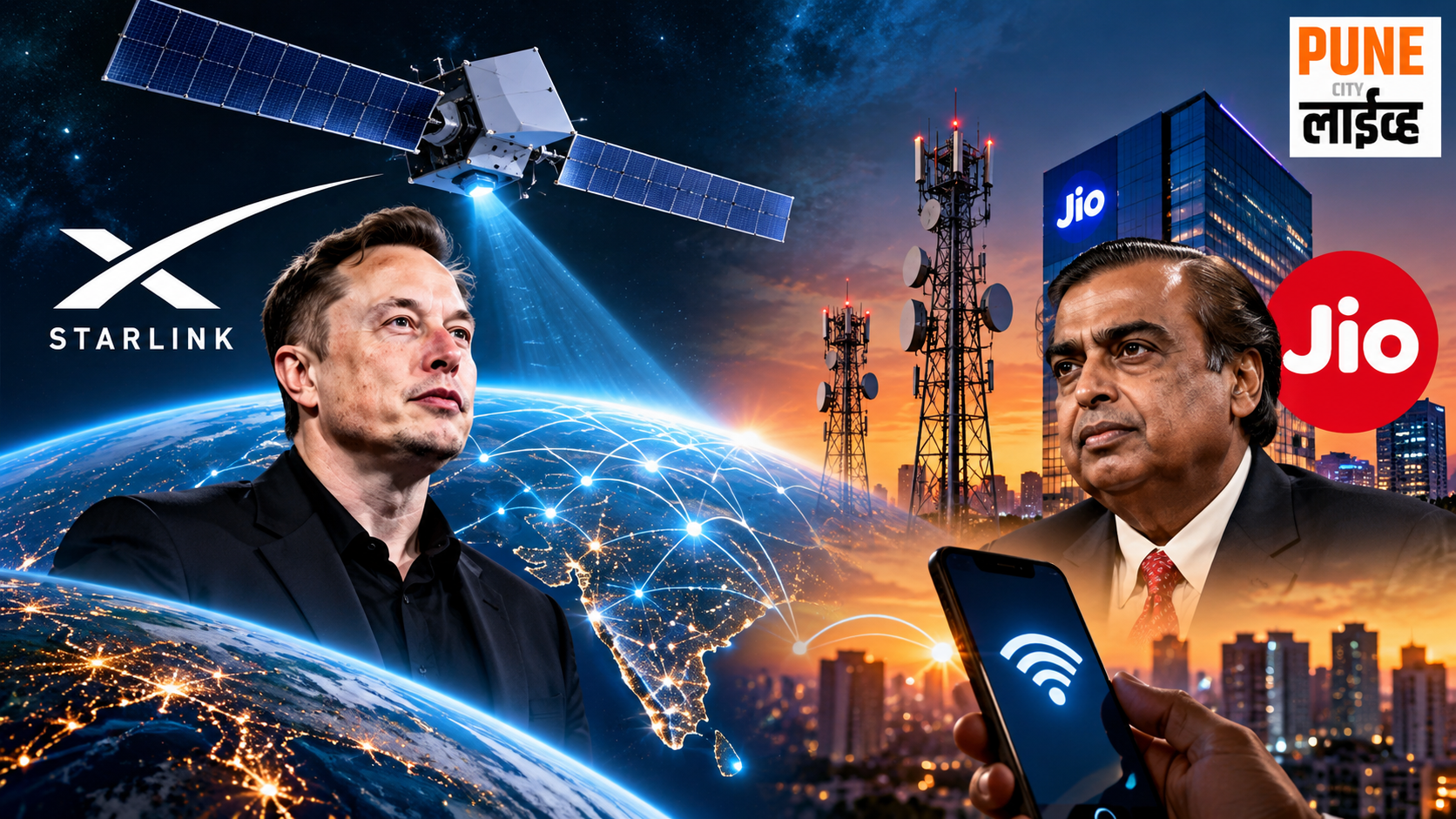
NEW DELHI — As Elon Musk’s satellite internet venture, Starlink, gears up for commercial operations in India, widespread debate has emerged over whether the low-Earth orbit (LEO) satellite network will disrupt existing domestic telecom giants like Reliance Jio. Industry analysts, however, paint a very different picture, describing the rivalry as complementary rather than existential.
The Clash of Technologies: Satellites vs. Terrestrial Fiber
Starlink delivers internet beam-to-dish directly from low-Earth orbit satellites, bypassing conventional ground towers and optical fiber. This makes it uniquely suited for isolated islands, defense outposts, maritime vessels, and remote Himalayan valleys where laying physical cable is economically or topographically unfeasible.

In stark contrast, Reliance Jio’s core strength lies in its extensive terrestrial fiber grid and high-density 4G/5G mobile tower infrastructure. Fiber provides nearly limitless bandwidth, gigabit-level speeds, and low latency inside high-density cities—an environment where satellite beams face physical line-of-sight constraints and bandwidth saturation per cell.
The Pricing Moat
India remains one of the world’s most price-sensitive telecom markets, with an average revenue per user (ARPU) hovering between $3 and $6 per month.
Reliance Jio: Offers 5G mobile data and high-speed fiber broadband starting from ₹399 to ₹999 per month, bundled with digital streaming ecosystems.
Starlink: Globally positions itself as a premium service, with hardware terminal kit costs running between ₹20,000 and ₹30,000 and estimated monthly subscription plans starting at ₹2,500 to ₹3,500.
Because of this steep price divide, Starlink’s consumer base in India is largely confined to enterprise clients, emergency services, luxury hospitality, and high-income households in off-grid locations.
Incumbents Are Not Standing Still
Rather than retreating, domestic operators are launching their own space-tech counterweights. Reliance Jio has partnered with satellite operators like SES to roll out JioSpaceFiber, backed by proposals for regional satellite constellations to serve rural backhaul.
Far from ending Jio’s market leadership, Starlink’s arrival is poised to plug India’s critical last-mile connectivity gaps, coexisting with mass-market fiber and 5G networks rather than replacing them.